CDL Air Brakes Test Questions and Answers: A Comprehensive Study Plan
Mastering air brakes is vital for your CDL; practice tests from CDLTest.co and state manuals are key resources for success, ensuring safe operation.
Air brake systems are fundamentally different from hydraulic brake systems found in most passenger vehicles, demanding a specialized understanding for Commercial Driver’s License (CDL) holders. These systems utilize compressed air to apply braking force to all wheels, offering robust stopping power essential for large, heavy vehicles. Understanding the core principles of air brake operation is paramount for safe and compliant commercial driving.
The system’s functionality revolves around building and maintaining air pressure within reservoirs. When the driver depresses the brake pedal, compressed air is directed to brake chambers, activating the brakes. Crucially, the system is designed to apply the brakes if air pressure is lost, utilizing spring brakes as a safety mechanism. Thorough knowledge of these components and their interactions is vital for passing the CDL air brake endorsement test and, more importantly, for ensuring road safety.
Preparation involves familiarizing yourself with the system’s parts and how they work together, utilizing resources like CDLTest.co and official state manuals.
Why Air Brakes are Crucial for CDL
Air brakes are not merely a component of CDL vehicles; they are a foundational element of safe commercial operation. Unlike hydraulic systems, air brakes provide a significant safety margin due to their fail-safe design – spring brakes automatically engage upon air pressure loss. This is critical given the immense weight and momentum of large trucks and buses.
A CDL with an air brake endorsement signifies a driver’s competence in inspecting, maintaining, and operating these complex systems. The endorsement is legally required to operate vehicles equipped with air brakes, and a thorough understanding is essential to prevent accidents. Mastering air brake principles directly translates to enhanced road safety for both the driver and the public.
Passing the air brake portion of the CDL exam demonstrates this competency, utilizing practice tests from resources like CDLTest.co to solidify knowledge and prepare for real-world scenarios.
The Air Brake System Components
The air brake system is a sophisticated network, fundamentally differing from passenger vehicle braking. Key components work in concert to provide stopping power. The air compressor, driven by the engine, builds pressure, storing it in reservoirs/air tanks. This pressurized air is regulated by the air governor, maintaining a safe operating range by cutting in and out the compressor.
When the driver applies the brake pedal, air flows to the brake chambers, pushing rods that activate the brakes. Air lines and connections must be leak-free for optimal performance. Crucially, spring brakes are integrated, automatically applying if air pressure drops significantly, providing a vital fail-safe mechanism.
Understanding each component’s function is paramount for CDL holders, requiring diligent inspection and maintenance to ensure safe operation, as emphasized in CDL practice materials.
Air Compressor Functionality
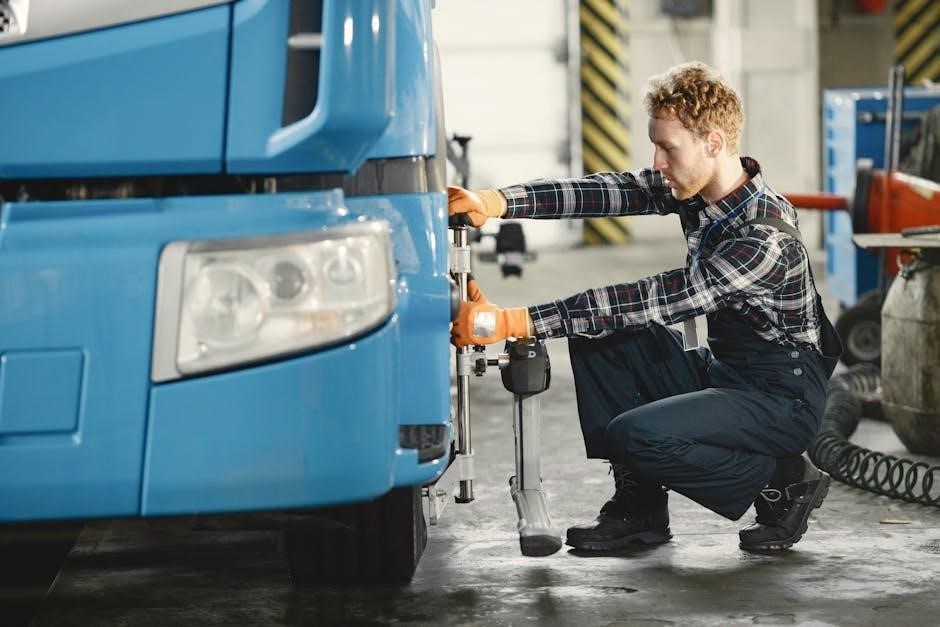
The air compressor is the heart of the air brake system, responsible for generating the pressurized air necessary for braking. Driven directly by the engine, it draws in atmospheric air and compresses it, storing the resulting high-pressure air in the reservoirs. A crucial aspect is understanding the compressor’s cut-in and cut-out pressures – the points at which it engages and disengages.
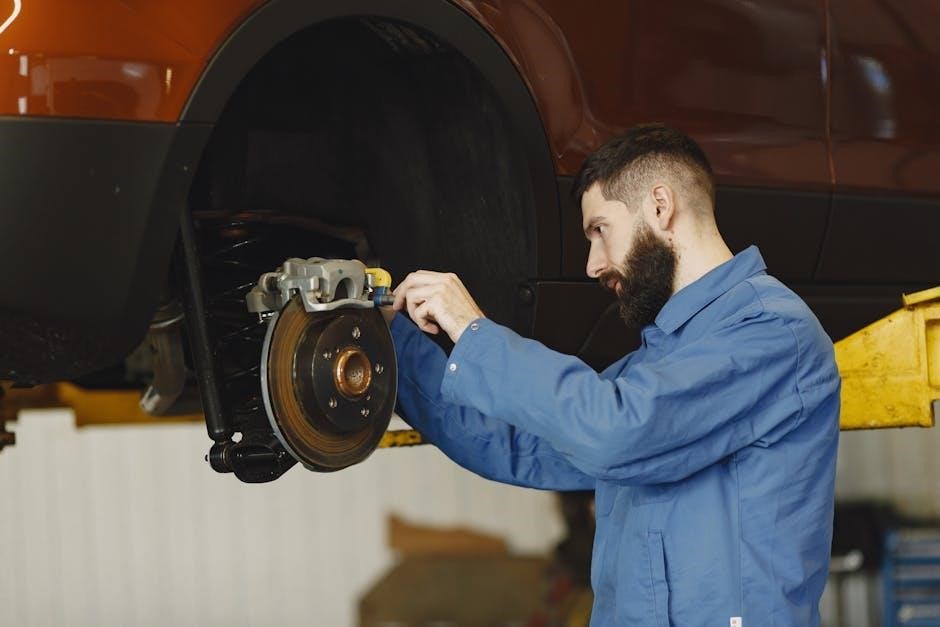
During operation, the compressor should begin to pump air (cut-in) when the tank pressure drops to the manufacturer’s specified level, typically around 100-125 PSI. It should then cease operation (cut-out) when the maximum pressure is reached, usually around 140 PSI. Proper functionality ensures a consistent air supply for reliable braking performance.
Regular checks of compressor operation are vital during vehicle inspections, confirming it builds and maintains adequate pressure.
Air Governor Operation & Testing
The air governor is a critical component regulating the air pressure within the system, preventing over-pressurization and ensuring safe operation. It controls the compressor by governing when it cuts in and cuts out, maintaining air pressure within a defined range. When pressure reaches the maximum limit, the governor vents air to the atmosphere, stopping the compressor.
Testing the governor involves observing its response to brake application. Stepping on and releasing the brake pedal should cause the compressor to cycle on and off appropriately. A malfunctioning governor, failing to maintain sufficient pressure, poses a significant safety risk.
If the governor doesn’t function as expected, immediate repair is necessary to guarantee safe driving conditions and reliable braking performance.
Reservoir/Air Tanks – Capacity and Importance
Air reservoirs, or air tanks, are fundamental to the air brake system, serving as storage for compressed air. Their capacity directly impacts the system’s ability to supply sufficient air for repeated brake applications. Adequate tank size is crucial, especially for larger vehicles or those operating in demanding conditions like steep grades or frequent stops.
The importance of these tanks lies in their ability to maintain consistent air pressure, even during multiple braking events. A properly sized reservoir ensures that enough air remains available for emergency braking and spring brake activation. Regular inspection for leaks and corrosion is vital to maintain their integrity.

Maintaining sufficient air pressure within the reservoirs is paramount for safe and effective braking performance.

Brake Pedal Application & Control
The brake pedal in an air brake system doesn’t directly apply the brakes like in hydraulic systems. Instead, it controls the airflow into the brake chambers. Pressing the pedal increases air pressure, which then pushes against the chamber diaphragm, activating the brakes. Understanding this distinction is crucial for CDL drivers.
Controlling the pedal’s pressure dictates the braking force; a gentle press results in light braking, while a firmer press delivers stronger stopping power. Smooth and controlled application prevents sudden stops and maintains vehicle stability. Releasing the pedal allows exhaust valves to release air from the chambers, disengaging the brakes.
Proper pedal technique is essential for safe and efficient operation, ensuring predictable and responsive braking performance.
Understanding Air Brake Service and Emergency Brakes
Air brake systems feature both service and emergency brakes, each serving a distinct purpose. Service brakes are the primary stopping mechanism, utilized for regular driving and controlled deceleration. They apply the brakes proportionally to the pedal pressure, allowing for smooth and gradual stops.
Emergency brakes, conversely, are designed for critical situations demanding immediate stopping power. Typically activated by pulling a red “emergency” or “spring” brake handle, they rapidly apply the brakes, often utilizing the spring brakes for maximum force.
Knowing the difference and appropriate application of each is paramount for CDL drivers, ensuring safe responses to various road conditions and potential hazards. Practice identifying and utilizing both systems effectively.
Air Brake Failure – Identification and Response
Recognizing air brake failure is crucial for driver safety. Key indicators include the low air pressure warning signal – typically a light and/or audible alarm – signifying insufficient air supply. Immediate action is required if this activates during operation.
Spring brakes automatically engage when air pressure drops below a critical level, bringing the vehicle to a stop. Understanding this automatic application is vital. Additionally, excessive brake pedal travel or a spongy feel can indicate air loss or system malfunction.

Proper response involves safely pulling over, activating hazard lights, and diagnosing the issue before proceeding. Never operate a vehicle with known air brake deficiencies; prioritize safety and seek professional repair.
Low Air Pressure Warning Signals
Low air pressure warnings are critical safety features in any commercial vehicle equipped with air brakes. These signals, both visual and audible, alert the driver to a potentially dangerous situation – a diminishing air supply needed for effective braking.
Typically, the warning system activates when air pressure drops below 60 PSI. This triggers a visual warning light on the dashboard, often red in color, and simultaneously activates an audible buzzer. These signals are designed to be immediately noticeable.
Ignoring these warnings is extremely dangerous. Upon activation, drivers must safely pull over, assess the situation, and address the air pressure loss before continuing operation. Prompt response prevents potential brake failure and ensures road safety.
Spring Brakes – Automatic Application
Spring brakes represent a crucial safety mechanism in commercial vehicles, functioning as an emergency backup to the primary air brake system. Unlike traditional brakes relying solely on air pressure, spring brakes utilize powerful springs to engage the brakes.
When air pressure drops to a critical level – typically around 20 to 45 PSI – a control valve automatically releases the air pressure holding the springs compressed. This allows the springs to expand, forcefully applying the brakes to all wheels.
This automatic application ensures the vehicle comes to a stop even in the event of complete air pressure loss, preventing runaways. Drivers must understand this system and avoid attempting to override it, as it’s a vital safety feature.
Air Loss Rate Testing Procedures
Proper air loss rate testing is essential to verify the integrity of the air brake system, ensuring it can maintain sufficient pressure for safe operation. The procedure involves fully charging the system to its maximum pressure, typically around 120-140 PSI.
Then, with the engine off and the parking brake engaged, time how long it takes for the air pressure to drop from 100 PSI to 80 PSI. Regulations generally specify a maximum allowable leakage rate – for a combination vehicle, it’s often no more than 3 PSI in one minute.
Inspect all connections for leaks during this test, using a soapy water solution to identify bubbles. Excessive leakage indicates a problem requiring immediate attention, such as faulty seals or damaged air lines.
CDL Air Brake System Inspection
A thorough CDL air brake system inspection is paramount before operating any commercial vehicle. This inspection isn’t merely a checklist; it’s a critical safety procedure designed to identify potential malfunctions before they lead to accidents. Begin by ensuring the air compressor functions correctly, observing the cut-in and cut-out pressures while the engine idles.
Next, meticulously examine all air lines and connections for cracks, leaks, or damage. Pay close attention to brake chambers and slack adjusters, verifying proper operation and travel. Check for loose or broken parts, and ensure all components are securely mounted.
Don’t forget to test the parking brake and perform the air loss test, confirming the system meets regulatory standards. A detailed inspection demonstrates professionalism and commitment to safety.
Daily Vehicle Inspection – Air Brake Focus
A focused daily inspection of the air brake system is non-negotiable for CDL holders. Start with a visual check of all air lines, looking for abrasions, kinks, or leaks. Ensure connections are tight and secure, free from corrosion. Inspect brake chambers for damage, and verify proper slack adjuster travel – excessive or insufficient travel indicates a problem.
Test the low-pressure warning signal by reducing air tank pressure with multiple brake applications. Confirm the spring brakes engage automatically before the pressure drops too low. Listen for any unusual noises during brake application and release.
Remember, a proactive inspection can prevent catastrophic failures and ensure safe operation. Document all findings and address any issues immediately before driving.
Inspecting Air Lines and Connections
Thoroughly examine all air lines for signs of wear, damage, or leaks during your pre-trip inspection. Pay close attention to areas where lines bend or pass near sharp edges, as these are common failure points. Look for cracks, abrasions, or kinks in the rubber components.
Inspect all connections – unions, fittings, and hose clamps – ensuring they are tight and secure. Check for corrosion, especially on metal fittings. A loose connection can lead to a rapid air loss and brake failure.
Feel for air leaks around connections by listening carefully or using a soapy water solution to identify bubbles. Replace any damaged lines or repair loose connections immediately before operating the vehicle.

Checking Brake Chambers and Slack Adjusters
Visually inspect brake chambers for leaks and damage, looking for cracks or dents in the chamber housing. Ensure the dust covers are in place to prevent contamination. Listen for hissing sounds indicating air leaks when the brakes are applied and released.
Examine slack adjusters for proper stroke length and any signs of damage or corrosion. Excessive slack indicates a need for adjustment, potentially leading to reduced braking efficiency. Verify that the pushrods are moving freely and are properly lubricated.
Confirm that all components are securely mounted and that there are no broken or missing parts; Proper functioning of brake chambers and slack adjusters is crucial for effective braking performance and safety.
Air Brake Adjustment Procedures
Proper brake adjustment is paramount for safe and effective stopping power. Begin by safely raising the vehicle and allowing the brakes to cool. Measure the slack adjuster stroke length using a tape measure, referencing the manufacturer’s specifications for acceptable limits – typically between ¾ inch and 1 ¼ inch.
Adjust brakes to ensure the slack adjuster falls within the specified range. Utilize the adjustment mechanism, typically a worm gear, to lengthen or shorten the pushrod stroke. Avoid over-adjusting, as this can cause the brakes to drag.
After adjustment, pump the brake pedal several times to seat the brakes and verify proper operation. Re-measure the slack adjuster stroke to confirm it remains within acceptable limits. Regular adjustments maintain optimal braking performance.
Slack Adjuster Measurement – Acceptable Limits

Determining slack adjuster stroke length is crucial during air brake inspections. Acceptable limits, as defined by regulations, generally fall between ¾ inch and 1 ¼ inch when measuring from the center of the slack adjuster pivot to the center of the pushrod.
Measurements exceeding 1 ¼ inch indicate excessive travel and require immediate adjustment. Conversely, measurements below ¾ inch suggest the brakes may be dragging, potentially causing overheating and reduced efficiency.
Consistent monitoring of slack adjuster stroke ensures optimal braking performance and prevents potential safety hazards. Accurate measurement and adherence to these limits are vital components of a thorough CDL air brake inspection, directly impacting vehicle safety and test readiness.
Proper Brake Adjustment Techniques
Adjusting brakes correctly involves utilizing the slack adjuster to achieve the proper stroke length. Begin by blocking the wheels and releasing the spring brakes. Then, manually extend the brake chambers using a suitable tool, ensuring the slack adjuster is at its minimum travel point.
Carefully tighten the adjustment nut, incrementally checking the stroke length with a ruler or gauge. Avoid over-tightening, which can cause the brakes to drag. Conversely, insufficient tightening results in excessive pedal travel and reduced stopping power.
After adjustment, release the brakes and verify proper operation through a test drive. Consistent, accurate adjustments are paramount for maintaining optimal braking performance and ensuring vehicle safety, directly impacting CDL test success.
Common CDL Air Brake Test Questions

Expect questions assessing your understanding of air compressor cut-in and cut-out pressures, requiring knowledge of manufacturer specifications. You’ll likely encounter scenarios involving acceptable air loss rates, demanding precise recall of permissible limits during static tests.
Furthermore, questions will probe your comprehension of spring brake functionality – automatic application scenarios and their importance as a safety mechanism. Component identification is crucial; be prepared to name and describe the purpose of various air brake parts.
Practice tests, like those offered by CDLTest.co, are invaluable for familiarizing yourself with these question types. Thorough preparation, utilizing state CDL manuals, will significantly boost your confidence and ensure a passing score on the air brake portion of the CDL exam.
Questions on Air Compressor Cut-In/Cut-Out Pressure
CDL air brake tests frequently assess your knowledge of air compressor operation, specifically the cut-in and cut-out pressures. Expect questions requiring you to identify the pressure range at which the compressor begins to pump air (cut-in) and stops (cut-out).
Understanding these pressures is critical, as they directly impact the air brake system’s ability to maintain sufficient pressure for safe operation. Questions may present scenarios asking you to determine if a compressor is functioning correctly based on observed pressure readings.
Remember to consult manufacturer specifications, as cut-in/cut-out pressures vary. Practice identifying appropriate pressure levels and recognizing potential malfunctions indicated by deviations from the standard range. Mastering this concept is essential for passing the CDL air brake exam.
Questions Regarding Air Loss Rates
CDL air brake exams heavily emphasize understanding acceptable air loss rates. You’ll encounter questions testing your ability to calculate and interpret air pressure drop over a specific timeframe, typically one minute, with the engine off and brakes released.
Knowing the maximum permissible air loss is crucial; exceeding this limit indicates a leak within the system, rendering it unsafe. Questions may present scenarios requiring you to determine if a vehicle passes or fails an air loss test based on provided data.
Practice identifying potential sources of air leaks and understanding their impact on braking performance. Familiarize yourself with the testing procedures and acceptable limits outlined in your state’s CDL manual. Accurate assessment of air loss is vital for safe commercial vehicle operation.

Questions on Spring Brake Functionality
CDL air brake tests frequently assess your knowledge of spring brake operation, also known as emergency brakes. Expect questions detailing how these brakes automatically apply when air pressure drops below a critical level, ensuring the vehicle remains stationary.
Understanding the mechanics – how compressed air normally holds the spring brakes disengaged – is key. Questions may involve scenarios where you must identify the conditions triggering automatic spring brake application and the resulting impact on vehicle control.
You’ll need to differentiate between service brakes, emergency brakes, and parking brakes, and their respective functions. Practice recognizing the warning signals indicating impending spring brake activation and the appropriate driver response to maintain safety.
Questions on Air Brake Component Identification
The CDL air brake exam will test your ability to visually and functionally identify key system components. Expect questions requiring you to pinpoint the air compressor, air governor, reservoirs (air tanks), brake chambers, and slack adjusters within diagrams or actual vehicle setups.
You must understand the purpose of each component and its role in the overall braking process. Questions may ask about the location of the air loss rate testing valve or the function of the low-pressure warning device.
Familiarize yourself with the appearance of various air lines and connections, recognizing signs of wear or damage. Practice identifying the different types of brake chambers and understanding how slack adjusters contribute to brake force application and adjustment.
Resources for CDL Air Brake Practice
To excel on your CDL air brake test, leverage a variety of practice resources. CDLTest.co offers comprehensive air brake practice tests, designed to mirror the actual exam’s format and difficulty, covering all essential topics.
Your state’s CDL manual is an invaluable resource, providing detailed explanations of air brake systems and specific regulations. Focus on the dedicated air brake sections for a thorough understanding.
Numerous online study guides supplement these materials, offering alternative explanations and practice questions. Utilize these to reinforce your knowledge and identify areas needing improvement. Consistent practice across these platforms will significantly boost your confidence and preparedness.
CDLTest.co Air Brake Practice Tests
CDLTest.co provides a crucial series of air brake practice tests specifically designed to prepare you for the CDL permit exam. These tests are not just a collection of questions; they are structured to simulate the real testing environment, helping you build both knowledge and test-taking confidence.
Each test focuses on a different aspect of air brake systems, ensuring comprehensive coverage of all relevant topics. By practicing each test individually, you can pinpoint your weaknesses and concentrate your study efforts accordingly.
Regularly utilizing these practice tests is a proven method for mastering the material and increasing your chances of passing the air brake portion of the CDL exam with a high score.
State CDL Manuals – Air Brake Sections
Your state’s Commercial Driver’s License (CDL) manual is an indispensable resource, offering detailed explanations of air brake systems and their operation. The air brake sections within these manuals are specifically tailored to the requirements of your state’s CDL exam, ensuring relevance and accuracy.
These manuals provide a foundational understanding of air brake components, functionality, inspection procedures, and troubleshooting techniques. They often include diagrams and illustrations to aid comprehension, making complex concepts easier to grasp.
Thoroughly reviewing the air brake section of your state’s CDL manual, alongside practice tests, is essential for building a solid knowledge base and maximizing your chances of success on the CDL air brake exam.
Online Air Brake Study Guides
Numerous online study guides complement official CDL manuals, offering diverse learning approaches for air brake mastery. These resources frequently present information in concise, easily digestible formats, often incorporating interactive elements like quizzes and simulations.
Websites like CDLTest.co provide a series of focused air brake practice tests, designed to mirror the questions encountered on the actual CDL permit exam. These tests help identify knowledge gaps and reinforce understanding of critical concepts.
Leveraging these online guides alongside official materials provides a comprehensive study experience, enhancing retention and boosting confidence. Remember to prioritize reputable sources and cross-reference information for accuracy, ensuring thorough preparation.
Final Preparation Tips for the Air Brake Test
Prioritize consistent practice with CDL air brake permit test questions, focusing on areas where you initially struggled. Utilize resources like CDLTest.co for realistic exam simulations and identify recurring themes in the questions.
Review the air brake sections of your state’s CDL manual thoroughly, paying close attention to component functions, inspection procedures, and failure response protocols. Understand the acceptable limits for slack adjuster measurements and air loss rates.
Visualize the air brake system during your study sessions, mentally tracing the flow of air and the operation of each component. A calm and focused mindset on test day is crucial; get adequate rest and arrive prepared to demonstrate your knowledge confidently.